Types of Retort Systems: Which One Suits Your Containers and Products?
Compare the types of retort systems, from steam to spray to steam/air, and learn which containers and products each one suits best for RTE food processing.
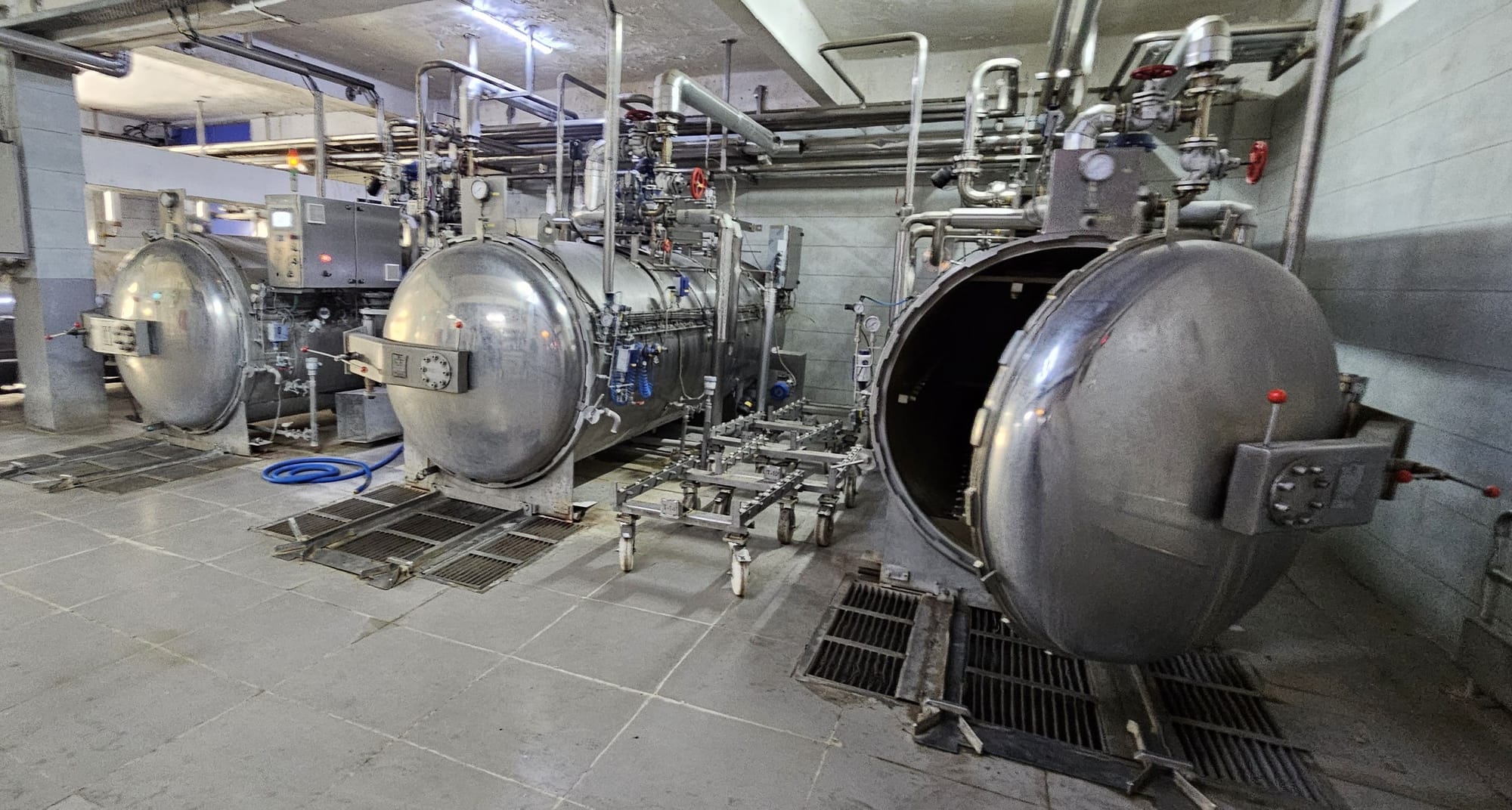
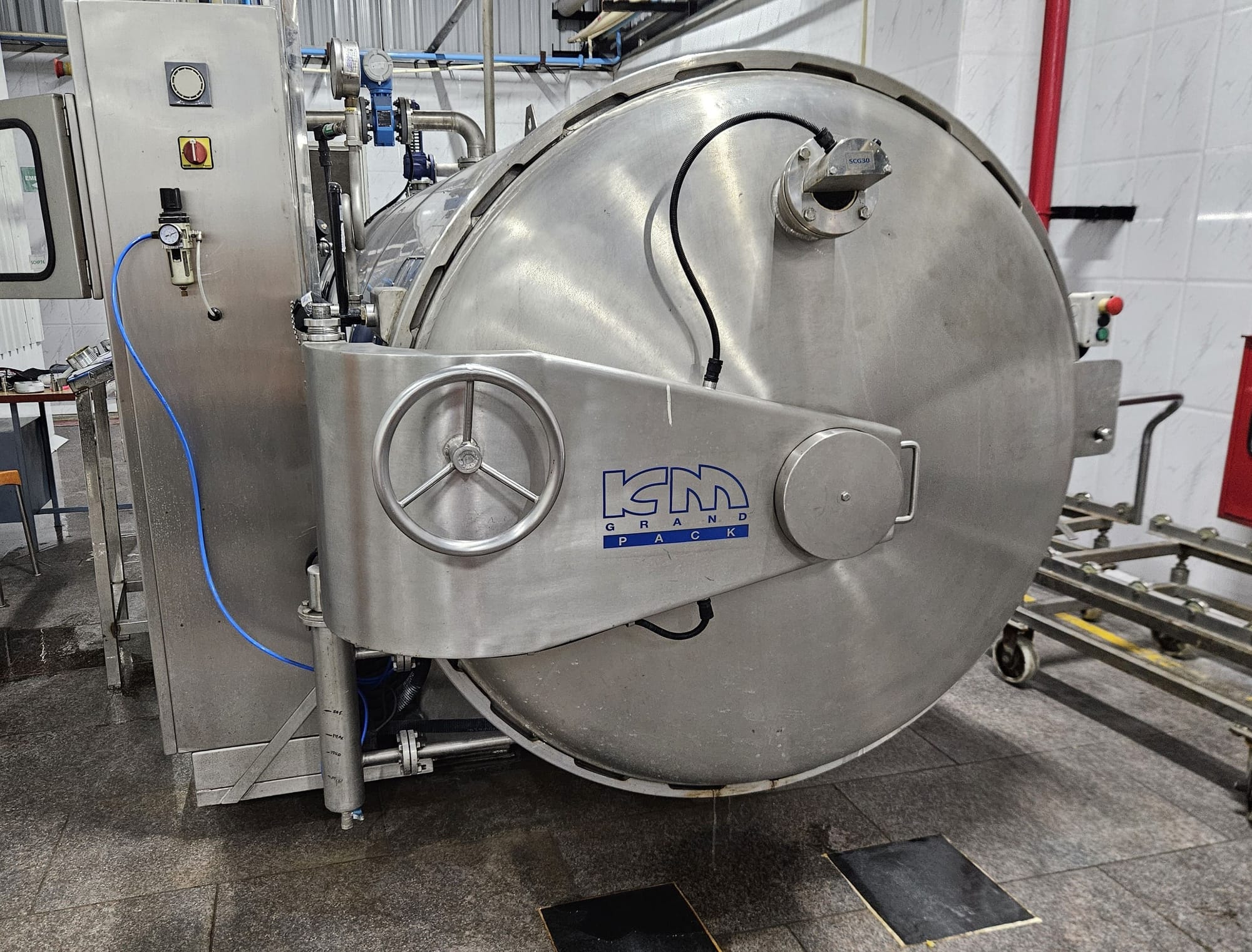
A retort is a pressure vessel that sterilizes food after it has been sealed in its container. The types of retort systems on the market differ in what carries the heat, whether they apply extra pressure, and whether they move the load. Those differences decide which containers and products a retort can run well. A retort chosen for metal cans may not suit pouches, and one built for pouches may be more than a can line needs.
The Main Types of Retort Systems and Where Each Fits
Each type below follows the same order: how it works, what it suits, and where it falls short.
Water Immersion Retorts
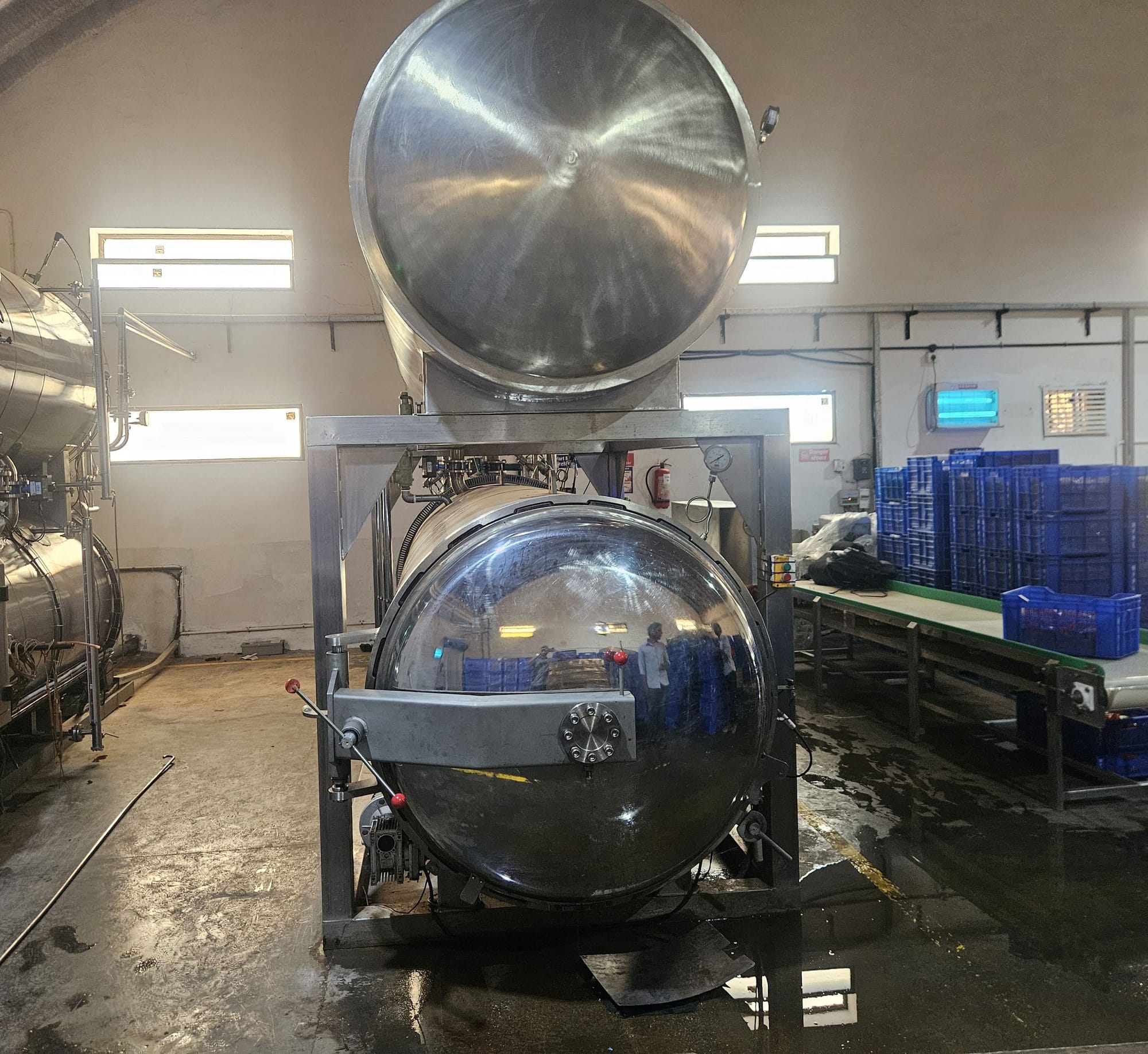
A static water immersion retort submerges the load in process water. Horizontal models use a pump to move water from bottom to top, with air or steam above the water level providing the overpressure. The most common horizontal designs add a second vessel that preheats the water to very high temperatures, which shortens come-up time. In vertical models, the vessel is filled with water, the baskets are lowered in, and compressed air injected at the bottom both circulates the water and creates overpressure. This retort gives immmediate heating to the product, greately reducing process time.
Vertical models are ideal for cylindrical containers standing upright, because the water flows along their sidewalls. Pouches, trays and flat cans resist the flow, and hot and cold spots typically develop. In horizontal models, the container shape that works best depends on how well the water inlet ports surround the baskets. Sumpot lists its water immersion retort as suitable for high-temperature-resistant packs such as large soft pouches, plastic bottles, bowls and cups.
Rotary Retorts With Water Immersion
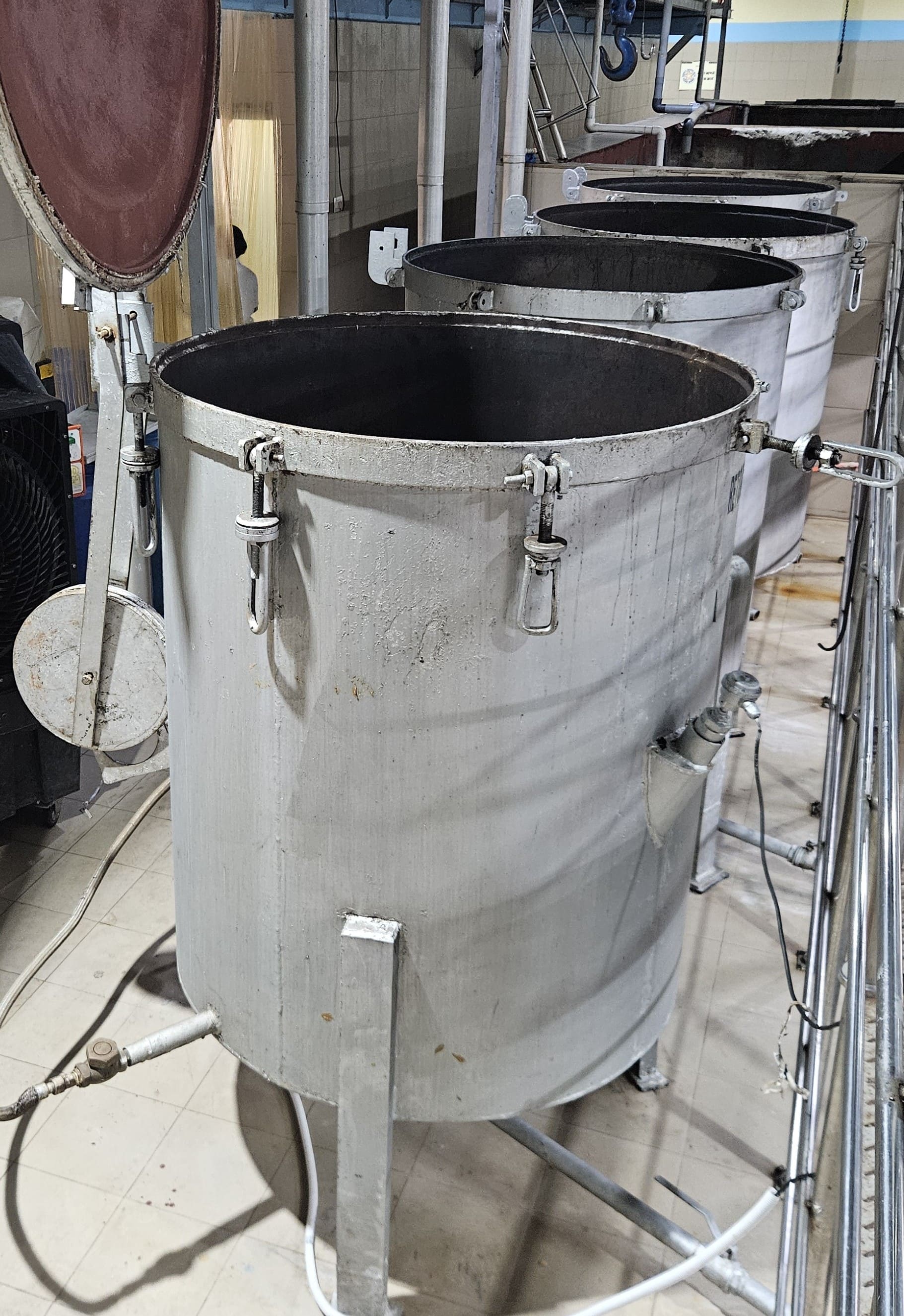
Rotary retorts turn the load end over end, most often inside a water immersion vessel. Rotor speeds range from 2 to 25 RPM. The motion drives the headspace bubble, the gap left above the food in a sealed container, through the contents and mixes the hot and cooler regions. Movement forces convection heating inside the container, and how much it helps depends on headspace, product viscosity, container geometry and orientation. Process time reductions of as much as 60% against static processing are possible. Water adds a practical benefit: it buoys the load, which relieves stress on the drive mechanism and on containers, glass jars and bottles in particular.
Metal cans, glass jars and polymeric bowls have historically benefited most, and some pouched products at speeds below 10 RPM can also benefit when headspace is well controlled. It is extremely useful in case of products that must be stirred during sterilization to avoid browning at the edge of the packaging, and gives rice pouches as an example, where mixing keeps the rice from sticking.
Water Cascade Retorts
Cascade retorts, also called shower, trickle or raining retorts, pump process water through an external heat exchanger and let it fall over the load from a perforated plate above the baskets. The water level stays below the baskets. They are ideal for upright cans and glass jars, while pouches, trays and flat cans obstruct the flow.
A load-position effect also applies. Water gives up heat as it falls through a basket, so containers at the top heat faster than those at the bottom. A process that counts only the heating stage toward sterilization will over-treat the top containers before the bottom ones reach the target.
Steam/Water Spray Retorts
A spray retort recirculates process water with a pump, heats it with steam or a heat exchanger, and sprays it through nozzles positioned around the baskets. The nozzles break the water into small droplets in overlapping conical patterns, and the number and position of nozzles can be set to suit the container type and orientation, often surrounding the load on three sides. Cooling normally runs through an external plate-and-frame heat exchanger, also from three sides. Overpressure is controlled by venting the shell or adding compressed air. This is the broadest type which is advantageous in cases where there are multiple types of products processed in the same retort.
Steam/Air Retorts
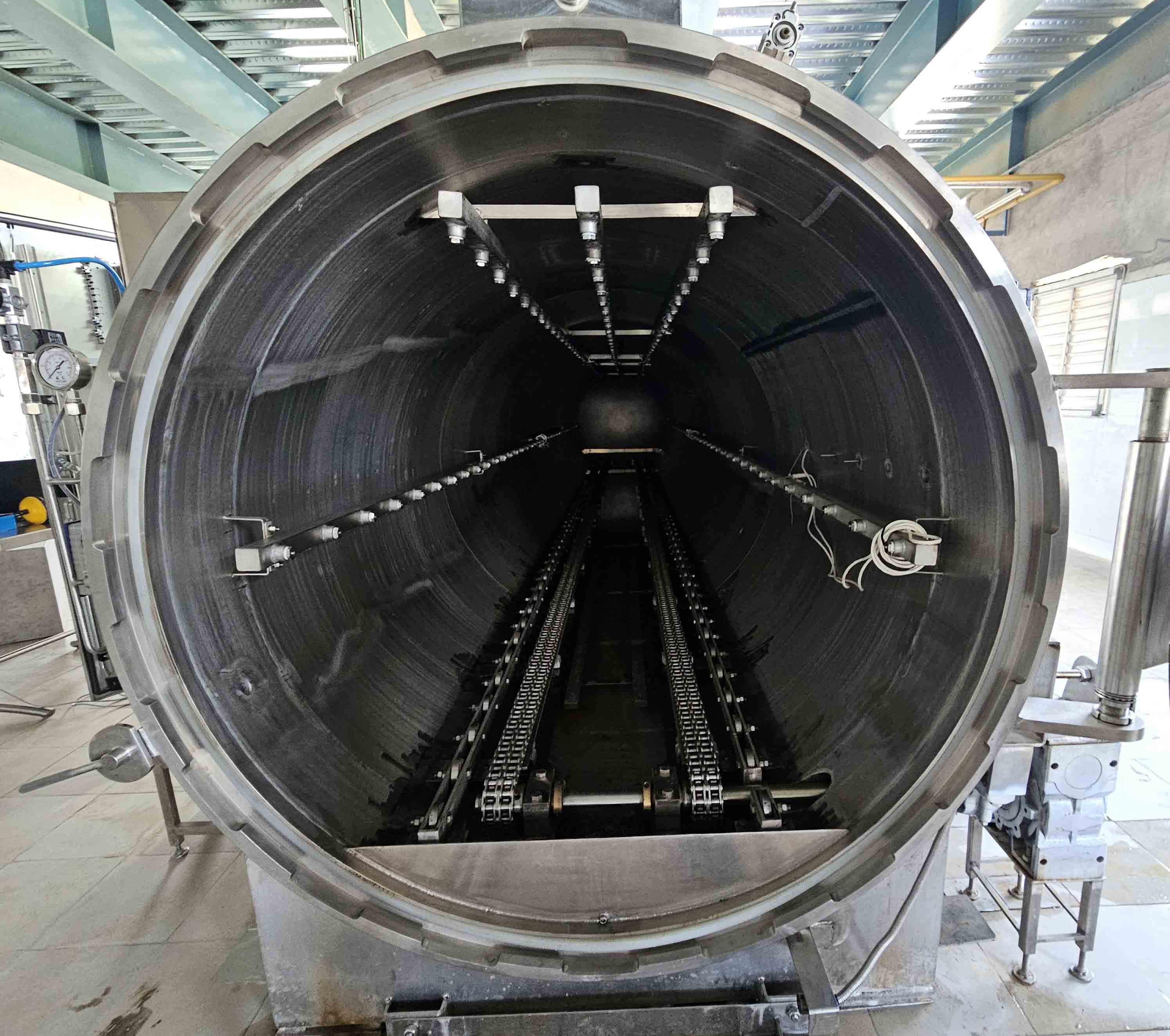
In a steam/air retort, steam enters at the bottom and vents at the top to remove most of the residual air, and compressed air sets the overpressure. A high-speed fan keeps the steam and air mixed and moving. In the common single-fan design, the mixture flows horizontally, parallel to the top and bottom of the shell, so it suits flat containers best: pouches and low-profile trays and cans. Multi-fan designs with vertical flow suit upright cylindrical containers instead.
The fan is the critical part. If circulation fails, pockets of air can insulate containers and cause under-processing. Containers on the side of the basket nearest the steam outlet heat first, and temperature evens out early in the holding stage.
Continuous Sterilizers
Continuous sterilizers carry sealed containers through heating and cooling towers in an uninterrupted flow. Suitable products are conductive (viscous) foods such as pet food, formulated bean products, canned meats and ready meals, condensed soups, baby food and pumpkin, and continuous retorts are best suited to commodity products packed in metal cans. This is the most efficient option but comes at a very high capital expenditure.
Retort Manufacturers to Know
These lists are not exhaustive and are not a ranking or endorsement.
Indian manufacturers:
- Sterdill
- Shreetech Engineering
- ITECH Engineering
- Dhruva Automation
- Lakshmi Engineering
International manufacturers:
Conclusion
The container narrows the choice faster than any other factor. Double-seamed metal cans suit saturated steam retorts. Upright cylindrical containers suit water immersion, cascade and rotary designs. Flat containers suit spray and horizontal-flow steam/air retorts. Cartons are commonly run in spray retorts with their own racks. High-volume metal cans are the case for continuous sterilizers. Manufacturers describe some of these boundaries differently, so the safest step before buying is to test your own container, product and load pattern in the machine you are considering.
Ready to Develop Your Retort Product?
Joeltech Systems works on retort processing and thermal validation, RTE product development and regulatory compliance. If you are choosing a retort, changing container formats or preparing a process for validation, reach out to us and we’d be happy to help you!